More insights

Product
October 9, 2026 at 07:00 AM
Fairown Flex is now available through Briqpay in Sweden, Norway, Denmark and Finland. It is a product subscription for consumers: a fixed monthly price instead of the full amount, a guaranteed buyback priced in on day one, and a choice at the end of the term to upgrade, hand the product back or keep it. The Fairown Flex page has the setup details. This post is about why we added it and which merchants should care.
Most of what we write about is how shoppers pay: card, wallet, invoice, bank transfer, buy now pay later. Flex answers a different question, which is how long the shopper expects to keep the thing they are buying.
For a phone, a laptop, a gaming PC, a TV, an e-bike or a pair of skis, the honest answer is often two or three years. After that the product is replaced, and the old one ends up in a drawer or on a secondhand site. A regular instalment plan ignores this. The shopper pays off the full price over the term and then owns a product worth a fraction of it.
Flex is built around that replacement cycle. Fairown prices the product's residual value at the point of sale and guarantees it. A regulated partner bank finances the purchase, so the merchant is paid up front, and the shopper pays a fixed monthly amount for a set period. Because the guaranteed buyback covers the final part of the plan, the monthly price is lower than an instalment on the same product. At the end of the term the shopper decides: upgrade to a new product and send the old one back, return it and walk away, or keep it by settling the remaining amount. Returned products are refurbished and resold.
Fairown runs the model in nine European markets and, according to its own figures, more than 161,000 contracts with a guaranteed buyback and over EUR 230 million of products have gone through its programmes since 2019.
Three things are happening at once.
The first is that the biggest brand in consumer electronics has adopted the model. On 28 July 2026 Apple launched Apple Upgrade in the United States: a lease for iPhone, Mac, iPad and Apple Watch from USD 17.99 a month, with the same three exits at the end of the term, upgrade, buy or return. It is US only for now, but it sets the expectation for how a premium device is bought, and Nordic shoppers read the same news.
The second is that Nordic consumers already think in monthly prices. In our own consumer checkout data, buy now pay later and invoice carry 53% of Swedish consumer checkouts on an ordinary day, and on the Black Friday weekend pay later took six points of share from other methods in both Sweden and the Netherlands. Shoppers who are used to splitting a purchase into monthly amounts understand a subscription with an upgrade immediately. The difference is that the monthly amount is lower and the upgrade is built in.
The third is the repeat customer. A shopper on an instalment plan is a one-off sale. A shopper on Flex comes back when the term ends, because the easiest way to upgrade is through the merchant they bought from. Fairown's own retail figures put repeat business as high as 60% on the model, and in one Nordic electronics retailer half of all smartphones sold in the category went out with a buyback after two and a half years. Those are the provider's numbers, not ours, but the direction is the point: a payment method that brings the customer back is worth more than one that only closes the sale.
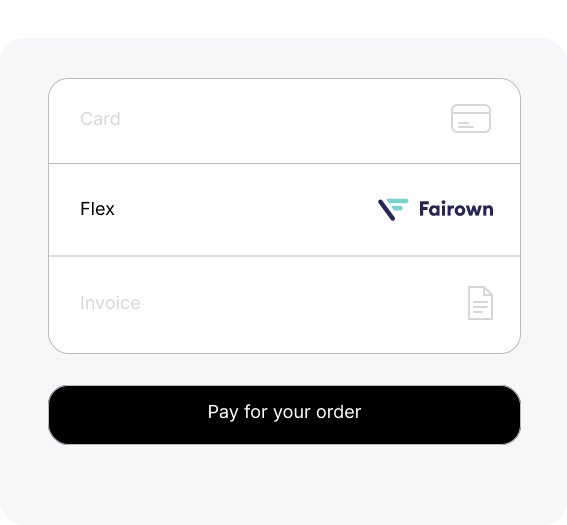
Flex is not a replacement for card, invoice or pay later. It is an extra option that only makes sense on part of the catalogue. A EUR 1,200 laptop is a Flex product. A phone case is not. That is why it matters how the method is shown.
With Briqpay, Flex is configured like any other method in the same checkout. You decide by market, category, cart value or customer type when it appears and where in the order it sits. A shopper buying a gaming PC in Stockholm sees Flex next to instalments and card; a shopper buying accessories sees the usual lineup. The merchant keeps its own agreement with Fairown and its own pricing, and the integration is the one you already have. Adding Flex to a store that runs on Briqpay is configuration, not a project, which is the same argument we make for every method in our payment orchestration layer.
For merchants selling across the Nordics there is a practical advantage too. Fairown works with a regulated partner bank in each market, so the same Flex configuration can be switched on country by country without a separate lender integration for each one.
Flex is a credit agreement between the shopper and the partner bank, and the bank runs the creditworthiness check. From 20 November 2026 the EU's revised Consumer Credit Directive applies in Sweden, Denmark and Finland, and consumer credit at checkout, including instalments and subscriptions financed by a bank, falls under it. Our country by country CCD2 guide covers what changes. The short version for Flex is that the lender carries the regulatory obligations, but your checkout needs to show the terms clearly and handle a decline gracefully, with another method ready in the same session.
Beyond that, three things decide whether Flex works for you:
Fairown Flex is available now to Briqpay merchants in Sweden, Norway, Denmark and Finland. The Fairown Flex page has the overview, and the full payment method library shows what else is available in each market. If you are planning your checkout for Black Friday, Flex is worth adding before the peak: our week by week Black Friday checklist has the timing, and what actually reduces checkout costs and cart abandonment has the wider argument for why the right method on the right product is what moves conversion.
To switch Flex on, or to talk through whether it fits your catalogue, request a demo below and we will set it up with you.
The Swedish credit share and Black Friday figures come from Briqpay's own consumer checkout data, with internal test transactions excluded; payment methods are grouped by category and reported as shares. Fairown's contract, volume and repeat business figures are the provider's own and are quoted as published. Nothing here is legal or financial advice.
Briqpay for Shopware 6 is live and open source. One plugin that orchestrates cards, wallets, bank transfer, invoice and BNPL from any provider, inside the native checkout, for consumers and business buyers. Here is why orchestration beats a card gateway for European merchants.
A recap of everything that landed on the Briqpay platform in the first half of 2026: PSP Connect in the Merchant Portal, a new Release Remaining API call, expanded payment coverage across Mollie, Adyen, Svea and Resurs, and what's coming before peak season and the CCD2 deadline.
Litium has built one of the strongest B2B commerce platforms in the Nordics, and payment flexibility is a big part of that story. Here is what changed in the rebuilt 2.0 version of Briqpay's checkout app for Litium, and why platform openness matters more than ever for B2B merchants.
Connect any payment provider. Optimize your payment flow. Scale without limitations - with Briqpay’s Payment Integration Platform.
